




Nonprofits: Private Foundations
More Insight from Philanthropy Thought Leaders
09.22.2026 | Linda J. Rosenthal, JD
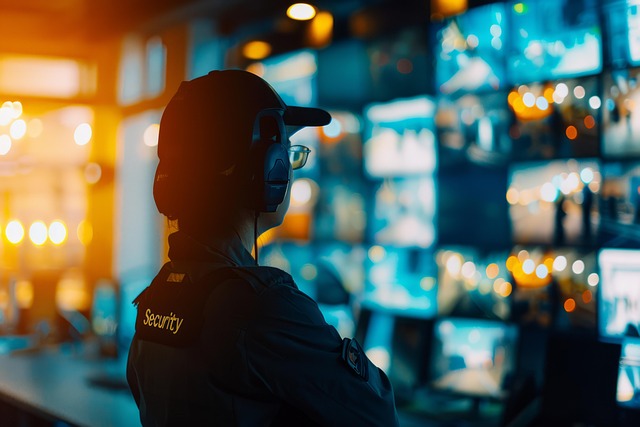
“[M]any nonprofits operate in vulnerable spaces that are open to the public, and they often lack the resources to invest in security on their own,” according to “San Diego attorney May L. Harris, whose For Purpose Law Firm specializes in representing tax-exempt organizations.” She added: “Special grant funding helps these organizations address risks that most nonprofits simply cannot afford to manage, including securing their facilities, training staff and implementing emergency responses.”
Ms. Harris’s comments appeared in an article yesterday that followed up on the tragic shooting on May 18, 2026, at the Islamic Center of San Diego. See Despite millions in spending, experts say zero-risk security at houses of worship not possible (May 25, 2026, 5:00 am PDT) Jeff McDonald and Alex Riggins, The San Diego Union-Tribune.
The U-T reporters highlighted the critical role of federal and state programs that “provide money to schools, churches and other nonprofits that might become targets for political extremists.” Over the past decade or so, the Islamic Center has received [at least] $600,000 under the federal Nonprofit Security Grant Program (NSGP) as well as another $590,000 from the California State Nonprofit Security Grant Program (CNSGP).
Imam Taha Hassane and Ghouse Mohammed, the Center’s head of security, explained how carefully over a number of years they considered the possible risks and explored various protection measures and strategies. They wanted to “harden” the mosque and school without creating an armed-camp atmosphere for the children. They described how the government money permitted them to implement the choices they made, including hiring a security guard. Abdullah Amin bravely defended the premises at the cost of his own life. He and two teachers obstructed the attackers’ entry, thereby saving the lives of all of the children and the other staff inside the building.
Similarly, in the recent case of the thwarted terrorist attack in March 2026 at Temple Israel of West Bloomfield, Michigan, funds from the Nonprofit Security Grant Program was critical in the creation of a solid security system and plan. The head of security, a former police lieutenant, stopped the armed attacker outside the building. See On Capitol Hill, Federations Build Bipartisan Support for Security Measures (March 18, 2026) jewishfederations.org [“If not for millions invested in Jewish security, including a regional and on-staff security system, last week’s incident could have become one of the largest terrorist attacks in the history of the country.”]
See also: Jewish groups urge Congress to end security funding ‘stalemate’ after Michigan attack (March 13, 2026) Aaron Bandler, jns.org [“The Nonprofit Security Grant Program makes it possible for schools and synagogues to harden physical security, and hire and train private security guards.”]; and Temple Israel gives thanks that attack wasn’t worse (March 16, 2026) John Wisely et al, Detroit Free Press.
The Union-Tribute reporters mentioned that “[b]oth the federal government and California now award millions of dollars a year to nonprofit schools, churches and other facilities that are vulnerable to hate crimes like the shooting last week at the Islamic Center of San Diego.”
However, experts caution that “no level of spending can guarantee public safety. The very nature of shopping centers, schools, churches and other soft targets leaves them vulnerable to attacks from people committed to hate crimes and political violence.” And, certainly, the “need to maintain spaces open to innocent program participants, visitors, and bystanders, is balanced against the need for security and the clear proof of bad actors determined to do terror attacks.”
“The tragic events at the Islamic Center underscore how critical this support is, and the real-world consequences when those critical funds get cut,” May Harris added.
That’s exactly what happened a year ago, in the spring of 2025, when the Trump 2.0 administration was cutting federal funding abruptly across many government agencies. They alleged it was necessary to determine which programs were in alignment with the ideology and priorities of the President. We reported a year ago on that sudden and catastrophic decision in Nonprofit Security Grant Program: Bipartisan Push to Unfreeze It (April 3, 2025) FPLG Blog. In somewhat uncharacteristic fashion, members of Congress, in a bipartisan chorus, howled against this move. After all, each and every Congressional district includes many houses of worship.
In any event, the spigot came back on in early May. See Update on Nonprofit Security Grant Program (May 28, 2025) FPLG Blog. The financing issue then turned back to the perennial one about annual appropriation levels.
In recent months, Congressional negotiators have, indeed, turned their attention to the matter of an appropriation figure for the NSGP for FY 2026-27. Despite the widely acknowledged fact that the need for federal security-grant funding for nonprofits is exploding, lawmakers settled on an appropriation amount of approximately $300-million.
There has been considerable blow back to this dollar amount. Experts generally concur that adequate funding would require something more in the neighborhood of $1-billion. Members of Congress are been lobbied heavily to raise their earlier appropriation decision. There is significant bipartisan support for such a substantially higher appropriation.
High-profile terror attacks like the recent ones near Detroit at Temple Israel and at the Islamic Center of San Diego have bolstered the clamor for more funds. See, e.g., Amo, McCaul, 148 Members Request $1 Billion for Nonprofit Security Grant Program to Protect Houses of Worship and At-Risk Organizations (March 20, 2026) Press Release, Rep. Gabe Amo (D-RI), amo.house.gov; and Religious leaders, lawmakers push for $1 billion to secure houses of worship (May 24, 2026) Barbara Sprunt, NPR.
There is still time left before the appropriations for FY 2026-27 are made. The advocacy for much more security money will likely continue and get louder.
And there’s little doubt that there will be additional terrorist attacks over the next weeks or months that will add evidence to support dramatically upping the funding level for the coming fiscal year.
In 2025, we covered several other important stories about the federal Nonprofit Security Grant Program as well as the state-counterpart funding programs springing up around the nation to either supplement the federal program or to provide funds to applicants that did not receive NSGP money.
We also reported on the disturbing moves by the administration to condition NSGP funding on an awardee’s cooperation with federal ICE officials at their site and otherwise to aid, instead of oppose and thwart, the White House’s aggressive immigration strategy and tactics. See Nonprofit Security Grants: More News (December 26, 2026) FPLG Blog.
There was substantial and immediate opposition to this move. See, e.g., Multiple Attorney General’s Sue DHS to Protect Emergency Preparedness and Disaster Relief Funding (May 15, 2025) Matt Seldon, Homeland Security Today; Federal Courts Block FEMA & DHS Immigration Grant Conditions, Safeguarding Billions in Emergency Preparedness Funds (October 7, 2025) Lawrence Bennett, Esq., Homeland Security Today and DHS unlawfully favored certain states in counterterrorism grant awards (December 22, 2025) Destiny DeVooght, Courthouse News.
In later posts, we’ll pursue and report on any updates to these alarming government actions.
– Linda J. Rosenthal, J.D., FPLG Information & Research Director
Sign up to be notified when we publish news and articles that impact nonprofits, social entrepreneurs and philanthropists.