



Nonprofits: Legislation
Blunting Fed Threats to Charitable Sector: New CA Law
10.07.2026 | Linda J. Rosenthal, JD
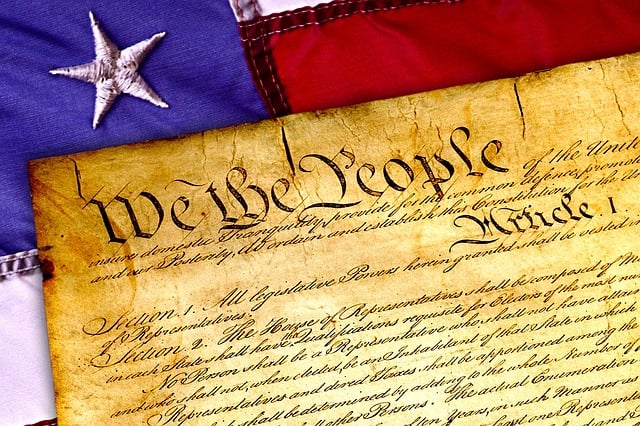
“He can handle no part of the public money except what is given him by law.”
That was how Founding Father Edmund Randolph explained to his fellow Virginians at their 1787 constitution-ratifying convention why “the new office of the President need not be feared.”
Leaders of the brand-new United States of America had, after all, been former subjects of Great Britain. They had taken to heart what led up to the Glorious Revolution of 1688: centuries of profligate and out-of-control monarchs who could not, or would not, understand the difference between official government funds and their own. “The revolution permanently established Parliament as the ruling power of England.”
More specifically, “… [h]istorically, British kings had used their royal prerogatives both to legislate and to tax and spend without the approval of Parliament. The result was a blurring of the lines between the monarch’s pocket money and the national treasury, leading kings to spend public funds however they pleased. Only after the Glorious Revolution, when ‘[t]he whole basis for the monarchy had transformed,’ … were royal attempts to seize the purse strings finally squelched.”
However, the Framers had observed first-hand and in their own lifetimes how King George III had not fully absorbed the nuances of that new (post-1688) order, including on the matter of finances.
They had also participated directly in the trial run of the new Republic, the period in the 1780s under the Articles of Incorporation. That document was “conceptualized and drafted during the Revolutionary War by the Second Continental Congress. Many feared powerful and central governments, so they sought a national government with limited powers. However, the weakness of the new government created obstacles after the end of the war.” In particular, the central government did not have the power to raise revenue: That was reserved for the individual states.
It wasn’t easy to achieve a consensus about the size and power of the central government, but they agreed on (1) a separation of powers at the federal level into three co-equal branches of government, and (2) the power to tax and spend placed under the legislative branch, with correlating express limitations on incursions by the executive. “When the Framers gathered in Philadelphia to draft the new Constitution, there was no question that Congress would be granted the powers to tax, spend, and appropriate funds.”
These governing pillars are firmly rooted in the Constitution of the United States as drafted and ratified in the late 1780s. They have been confirmed repeatedly since then through the present day.
Well – that is, until almost the present day.
Federal district and appellate judges around the nation are running around with their collective hair on fire trying to hold the line on the shocking and repeated attempts by the Trump administration [both the first and – (much more now) – the second] to brazenly ignore and attempt to erode the clear provisions of the Constitution of the United States including the control over federal money.
Among the many of these devoted public servants are the exasperated jurists in court proceedings arising from the notorious OMB Memorandum M-25-13 (January 27, 2025), Temporary Pause of Agency Grant, Loan, and Other Financial Assistance Programs [2 pp. PDF]. That document rocked the nation – and the charitable community in particular – just a week after Inauguration Day 2025.
There are twin lawsuits – albeit filed in different venues and proceeding separately. They are:
We’ve reported in depth on the early journey of these lawsuits from the first filings in late January, continuing into February and March 2025 through the granting of preliminary injunctions. For background, see: Federal Funding “Pause”: Five-Alarm-Fire, Doused for Now (February 4, 2025) FPLG Blog; Litigating Freezing-Funds Directive From OMB (February 14, 2025) FPLG Blog; The Federal-Funds Freeze & the Impoundment Control Act (February 20, 2025) FPLG Blog; Preliminary Injunction Granted Re Freezing-Funds Directive (February 27, 2025) FPLG Blog; Another Preliminary Injunction in OMB Memorandum (M-25-13) Litigation (March 12, 2025), FPLG Blog; and The Preliminary Injunctions Re OMB Memorandum (March 18, 2025) FPLG Blog.
I can’t say often enough how extraordinary the efforts have been from the National Council of Nonprofits and the other three named plaintiffs, represented by Democracy Forward, as well as the offices of the 23 state attorneys general around the nation, who are litigating these lawsuits without the unlimited resources of the federal government-defendants.
In particular, in our post on February 4, 2025, we recounted the spy-novel-worthy events from early Monday evening – the 27th – when Acting OMB Director Veath electronically transmitted Memorandum M-25-13 “under cover of darkness and cloaked in secrecy,” to all department heads. Effective immediately, the freeze/pause order included a first deadline of no later than 5 pm EST on Tuesday, January 28th. It could have affected an estimated $3-trillion of appropriated money.
It would have wreaked widespread havoc had the secret order not been intercepted by the media, handing notice to the National Council of bNonprofits v OMB plaintiffs/attorneys as well as to the state attorneys general spread out across the nation. They worked feverishly overnight. By the next day – Tuesday, January 28th – the D.C. lawsuit headed by NCN was already filed, with a TRO in force before close of business. By Wednesday morning, proceedings were also underway in the new filing in Rhode Island by the coalition of Democratic AGs: A hearing was underway on the TRO which was granted subsequently.
(Having been involved in heart-stopping litigation deadlines earlier in my career, I can attest that this was nothing short of a miracle. I still can’t believe it got done – and done well. Those complaints were excellent, as has been all of the legal work on these cases since then.)
On March 6, 2025, John J. McConnell, Jr., Chief Judge of the District Court of Rhode Island granted the plaintiffs’ (23 state attorneys general) request for a preliminary injunction. See State of New York et al v. Trump et al,
The ruling – Memorandum and Order – was 45 pages long, but he opened it with several paragraphs of clear disapproval and warning: “The Executive’s categorical freeze of appropriated and obligated funds fundamentally undermines the distinct constitutional roles of each branch of our government. The interaction of the three co-equal branches of government is an intricate, delicate, and sophisticated balance—but it is crucial to our form of constitutional governance….”
He continued: “Here, the Executive put itself above Congress. It imposed a categorical mandate on the spending of congressionally appropriated and obligated funds without regard to Congress’s authority to control spending. Federal agencies and departments can spend, award, or suspend money based only on the power Congress has given to them–they have no other spending power.” The Executive has not pointed to any constitutional or statutory authority that would allow them to impose this type of categorical freeze.”
Elaborating, he added in order to blunt the government’s unmeritorious explanations and excuses: “The Court is not limiting the Executive’s discretion or micromanaging the administration of federal funds. Rather, consistent with the Constitution, statutes, and caselaw, the Court is simply holding that the Executive’s discretion to impose its own policy preferences on appropriated funds can be exercised only if it is authorized by the congressionally approved appropriations statutes. Accordingly, based on these principles and the reasons stated below, the Court grants the States’ Motion for Preliminary Injunction.”
Clearly, Judge McConnell was having none of the Trump 2.0 administration’s Olympic-medal-level “gaslighting” about presidential powers under the U.S. Constitution. (There are many other jurists – in this litigation arising from the notorious Memorandum (M-25-13) as well as in scores of other cases – who are deeply worried.)
On the very next page of that March 6, 2025 ruling, Judge McConnell plunged into the body of his Opinion, doubling down – bluntly – on the constitutional crisis: “Background. We begin by restating the American government principles learned during critical civics education lessons in our youth.”
He emphasized in his first footnote: “‘This is what it all comes down to: we may choose to survive as a country by respecting our Constitution, the laws and norms of political and civic behavior, and by educating our children on civics, the rule of law, and what it really means to be an American, and what America means. Or, we may ignore these things at our . . . peril…’”
It’s been a long eighteen months, often resembling a ‘one-step forward, three-steps back” reality. There have been many wins but there have been roadblocks as well lobbed down from all directions including, sadly, from the U.S. Supreme Court.
We’ll continue next time with a brief refresher regarding the constitutional taxing, spending, and appropriations particulars: just enough to help you understand “who can do what” regarding federal grants and other funding, and to assist you to filter out the baseless nonsense being spewed from the Oval Office and in repeated court filings.
It’s actually not rocket science: spelled out in black and white in the Constitution, and strengthened over and over again – particularly after the dark days of the Nixon administration.
These tenets had been pushed to what we all hoped would be the limit, but survived. The rules were bent but not broken.
– Linda J. Rosenthal, J.D., FPLG Information & Research Director
Sign up to be notified when we publish news and articles that impact nonprofits, social entrepreneurs and philanthropists.