


Nonprofits: Legislation
New CA Protections for Charitable Bequests of Non-Probate Accounts
10.14.2026 | Linda J. Rosenthal, JD
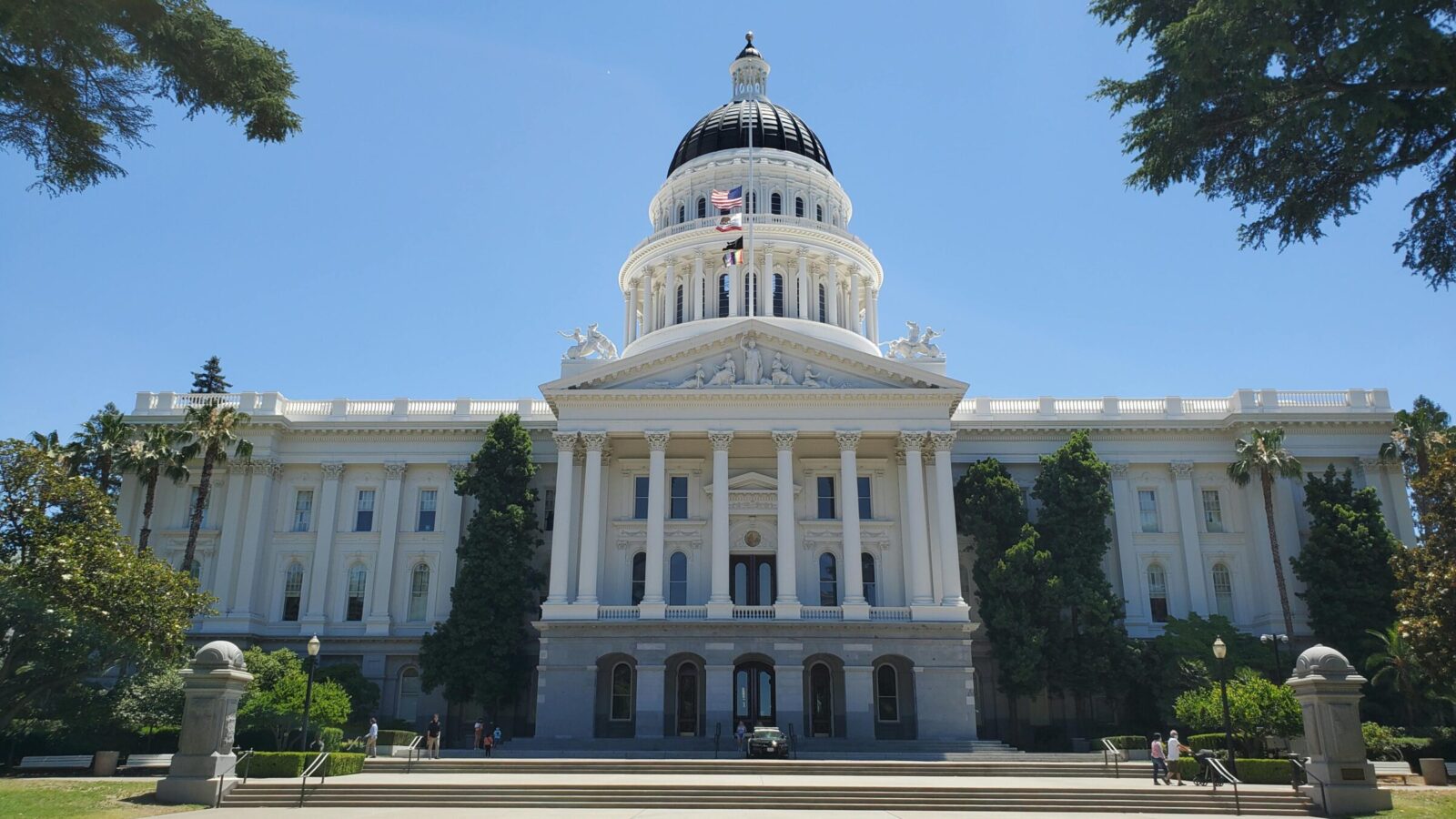
In 2023, the hottest legislative news out of Sacramento for California’s charitable sector was the ambitious California Nonprofit Equity Initiative.
Spearheaded by the California Association of Nonprofits, it was a seven-bill package of much-needed reforms of the state’s grantmaking system. Launched with fanfare, high hopes, and strong bipartisan support in the Legislature. After three years, though, only a single one – AB 590, advance payments – of the seven proposed reforms of the Initiative was signed into law despite the admirable efforts of CalNonprofits, of trusted legislative allies, and of the charitable community.
As someone who has covered this important story in no less than a dozen blog posts from 2023 through 2025, I’ve been more than perplexed about why the Initiative did not make it over the finish line. And now, more than ever – (particularly, with the federal grants pipeline in shambles) – all of these proposed reforms (and much more) are desperately needed.
“Is there a game plan for 2026?” I wondered as I prepared late last week to write the next blog post in our California Nonprofit Equity Initiative series.
There are three relevant but bare-bones listings in the CalNonprofits’ Legislative Roundup for 2026 dated April 1, 2026 and in its Legislation Tracker (updated daily).
The California Legislature conducts most of its business during regular two-year sessions known as “biennial sessions.” The 2025-26 regular session started on December 2, 2024, and will end on November 30, 2026.
The two items from the Year 1 (2025) are not DOA but are in a special and mysterious deep-freeze location in the Capitol building.
The bill by Senator McNerney, introduced on February 19, 2026, is under active consideration in the State Senate right now. This is the one to watch closely. It calls for the establishment of an “Office of Nonprofit Empowerment.” Sounds good, but is this a routine, ho-hum, sort of development – or a big deal?
It’s a Very Big Deal. This news is hidden behind a trail of breadcrumbs accessible by, for example, clicking on the hyperlinks in these listings. But how many people routinely click on those links?
Nevertheless, the breadcrumb trail leads to a valuable road map with many more hyperlinks and starring … the “Little Hoover Commission.”
“Little Hoover Commission”?
No? Not ringing a bell? You’re not the only one.
You’re more likely to vaguely recall a tidbit from high-school history class about a long-ago “Hoover Commission.”
In 1947, with World War Two and the Great Depression in the rear view mirror, President Harry S. Truman was nevertheless still saddled with the bloated federal bureaucracy that had mushroomed on account of those crises. To tackle this unmanageable mess, he relied on a brand-new Act of Congress that authorized creation of a blue-ribbon bipartisan board: the “Commission on Organization of the Executive Branch of the Government.”
The carefully selected twelve members were tasked with “developing recommendations to increase government efficiency and improve the organizational structure of the federal executive branch by reducing – through consolidation or elimination – the number of departments or creating new bodies as needed.”
To chair the Commission, Mr. Truman turned to elder statesman, Herbert Hoover. The 31st President (1929-1933) was a familiar face though not the most obvious choice to head a complex government reorganization. After all, he had been chief executive of the nation at the time of the Stock Market Crash of 1929 and the resulting fiscal devastation. Nevertheless, the two-year project was a great success that came to be known for short as the “Hoover Commission.” In the 1950’s, President Eisenhower tapped Mr. Hoover to reprise his role for another two years of tweaking the executive branch.
A few years later, in 1962, California Assemblymember Milton Marks “authored legislation” creating a “Commission on California State Government Organization and Economy.” It was designed – “like its federal predecessor” – as a bipartisan panel charged with making state operations more efficient and effective.”
It is still – to the present day – “America’s only permanent, independent citizens commission working to improve state government.”
The “mission is to evaluate the structure, organization, operation and function of every department, agency and executive branch of state government, along with the policies and methods for appropriating and administering funds.”
This oversight agency has the power to “investigate state government operations and policy, and – through reports and legislative proposals – make recommendations to the Governor and Legislature to promote economy, efficiency and improved service in state operations.” See California Government Code sections 8521-8525.
The appointment process for the thirteen members is set by statute: “(a) Nine members of the public, appointed for terms of four years …. Not more than five of these members shall be registered as members of the same political party, and none shall hold public office in the executive branch of the state government.” See section 8501.
A few decades ago, in 1993, there was a name change when the California Legislature honored the lawmaker who had created and served the agency for decades. It was renamed “The Milton Marks ‘Little Hoover Commission’ on California State Government Organization and Economy.”
But everyone calls it the “Little Hoover Commission.”
The current roster of commissioners includes distinguished and experienced Californians. This is no vanity panel of impressively credentialed “potted plants” who do little more than gather for occasional meetings. Over the decades, the diligent appointees have produced nearly 300 comprehensive reports detailing findings and recommendations for the Governor and Legislature.
In recent years, the Commission has undertaken many important and high-profile matters. For example, a recently completed project culminated in Report #287, May 2025: A Review of Government Reorganization Plan 2025. There, the Commissioners decided that “Governor Gavin Newsom’s proposal to create a new Housing and Homelessness Agency in California government should be approved, though with additional steps by the Legislature to make the plan more effective.”
The Little Hoover Commission, though located within the executive branch, is an independent state agency with the mandate to investigate government operations and recommend reforms to improve efficiency and economy. Its primary role being to advise the Governor and Legislature, the findings are non-binding. Nevertheless, the Commission is a prolific producer of nonpartisan recommendations and engages in the legislative process to implement the suggested improvements.
It has broad powers in this regard to examine executive branch structures, functions, and expenditures. It can hold public hearings, compel testimony, and require records from state and local entities via subpoena power.
Despite its always-heavy workload, the Little Hoover Commission turned its attention beginning in late 2024 to a topic which the panel members have made clear they believe must urgently be addressed; namely, “how the state can better work with the nonprofits that receive state funds to serve Californians.” That includes the long-overdue reform of the state’s inadequate and inequitable grantmaking system. “The Commission found that cash flow instability is a persistent operational challenge for the state’s nonprofit partners.”
To date, there have been three major publications: two reports and a survey:
What has emerged from this effort is a set of twelve recommendations that include every item on the California Nonprofit Equity Initiative wish list, and much more.
In Report 291’s transmittal message to the Governor and the Legislature, the chairman of the Little Hoover Commission, Pedro Nava, wrote: California’s nonprofit partners play an indispensable role in extending state capacity. They provide essential services to millions of Californians, employ more than 1.7 million workers, and serve communities government often cannot reach on its own. In undertaking its study of California’s grant and contract administration with nonprofits, the Commission sought to understand whether the state’s administrative systems have kept pace with the state’s reliance on these partners….[They do not.] ….The Commission respectfully submits these findings and recommendations, and stands ready to assist in strengthening California’s relationship with its nonprofit partners.”
The most important part of Report 291 is found about midway through it; i.e., a 12-item “summary of recommendations.” (There is also an abbreviated description in the “Executive Summary.”)
The final 5 of the twelve are collected in a subsubsection titled: “Creating the Infrastructure for Successful Grant Administration.” It begins: “Beyond reforms to payment, contract terms, and compliance, California must develop the infrastructure to support effective state-nonprofit partnerships. These five recommendations can help create the foundation for success.” The first item of the five is the most important for our purposes here:
The commentary continues:”The consistent theme throughout this report has been that far too often, California’s nonprofit organizations subsidize the delivery of state services and expend large amounts of time and resources to do so.”
See also:
This current (active) bill in the California Legislature – SB 1240 – codifies Recommendation 8. See Fact Sheet [“While nonprofits are essential partners in extending the reach of public agencies and innovating community solutions, they face systemic hurdles navigating California’s state government. Current procurement and grantmaking processes are needlessly complex, payments for services are often delayed, and state funding rarely covers the full cost of service delivery, according to a recent report from the Little Hoover Commission.”]
The Commissioners, of course, have been well aware of the California Nonprofit Equity Initiative. By the time that the Little Hoover Commission had committed to this project in December 2024, the earlier-launched Initiative had already been seriously hobbled.
It’s important to emphasize how much coordination there has been between Little Hoover and CalNonprofits in developing the next steps forward to achieve the common goals of “strengthening California’s relationship with its nonprofit partners.”
For example, in connection with SB 1240, CalNonprofits is not only sponsoring the legislation but took the lead in drafting a “blueprint” for it. See sponsor letters. here and here; and a blueprint.
In turn, the Little Hoover Commission has heartily endorsed the proposed legislation. See, for example, the official letter of support from chair Peter Nava to Senator Jerry McNerney, one of the valuable breadcrumb-links on the Legislation Tracker listing for SB 1240.
Mr. Nava, a former state legislator, begins: “The Little Hoover Commission is pleased to support SB 1240, which would create the Office of Nonprofit Empowerment, led by a gubernatorial appointee, with the primary responsibility of overseeing and coordinating state policy in support of California’s nonprofit organizations….” SB 1240 would further the goals of the Commission’s recommendation to develop a more unified approach to contracting with nonprofits….”
Senate Bill 1240, currently pending in the California Legislature, is – indeed – a Very Bill Deal.
There are many more breadcrumbs and roadway map points to unpack and discuss. Stay tuned.
– Linda J. Rosenthal, J.D., FPLG Information & Research Director
Sign up to be notified when we publish news and articles that impact nonprofits, social entrepreneurs and philanthropists.